HMS Caroline Royal Navy Museums
HMS Caroline Royal Navy Museums: Michael McConway
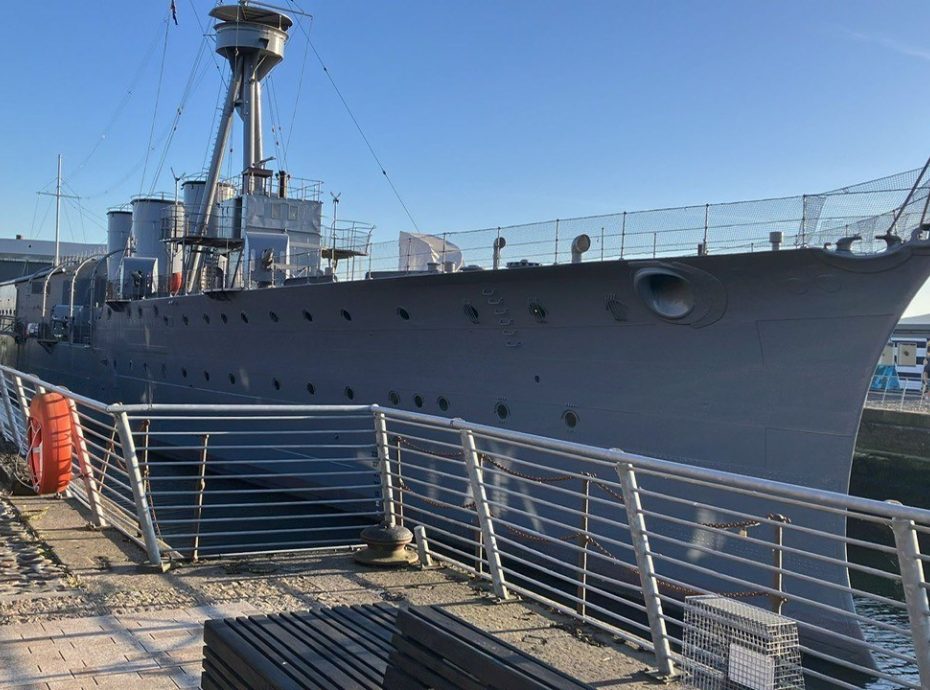
Before the industrial revolution, there were 280 parts per million of carbon dioxide in our atmosphere. This has risen to 400 parts per million which has resulted in the world becoming one degree Celsius hotter than in pre-industrial times. The ship where I work today contributed to this. HMS Caroline was a light cruiser built in 1914 and was powered on North Sea patrols by four turbine engines which were driven by steam; this steam was generated by burning oil in eight Yarrow boilers. Caroline could carry 878 tonnes of oil in her fuel tanks and the turbines and boilers were built with steel from foundries in Sheffield and Lanarkshire, costing £147000 at the time, and furnaces in these foundries would also have contributed to the emission of greenhouse gases.
I believe as a society that we need to shift our main energy sources from fossil fuels to renewable energy. The Fleet Air Arm Museum, Royal Navy Museums Naval Aviation at Yeovilton, has been leading a project creating renewable energy. The Cobham Hall sustainability project has seen the installation of 680 solar panels cutting carbon dioxide emissions on the site by 150 tonnes annually. Buildings contribute 38% of global greenhouse gas emissions, making decarbonisation and energy efficiency improvements including renewable energy sources such as solar panels or wind and better insulation essential. We also need to buy less physical products and make things last, changing our societal trends in over-consumption, adopting the make do and mend spirit of the Second World War. They did it to conserve resources andthus win the war; we must do it now to reduce, reuse, recycle and save our planet.
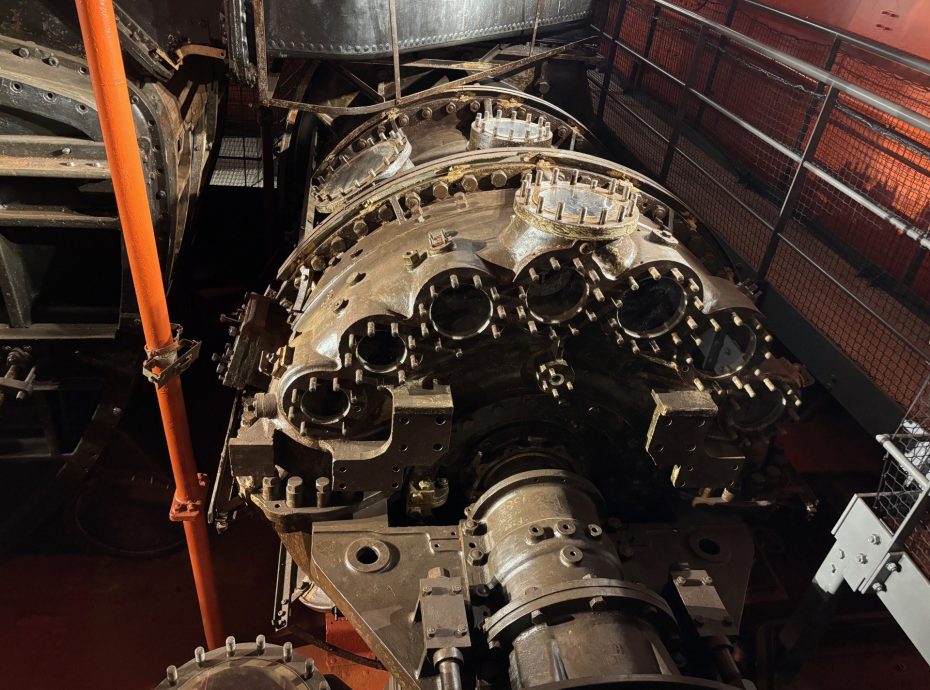
One of four Charles Parson’s Direct Drive turbines built in
1914 on HMS Caroline, now a Museum vessel with Royal Navy Museums at
Alexandra Dock, Belfast.